
The Birth of the Field Marshal
Article by John McLuckie, Innovation & Development Manager
Innovation often begins with a simple question. In late 2019, our Innovation & Development Team set out to answer one:
Could we create a portable, wireless impact attenuation device that delivered the same meaningful information as traditional laboratory equipment, but in a simpler and more practical format?
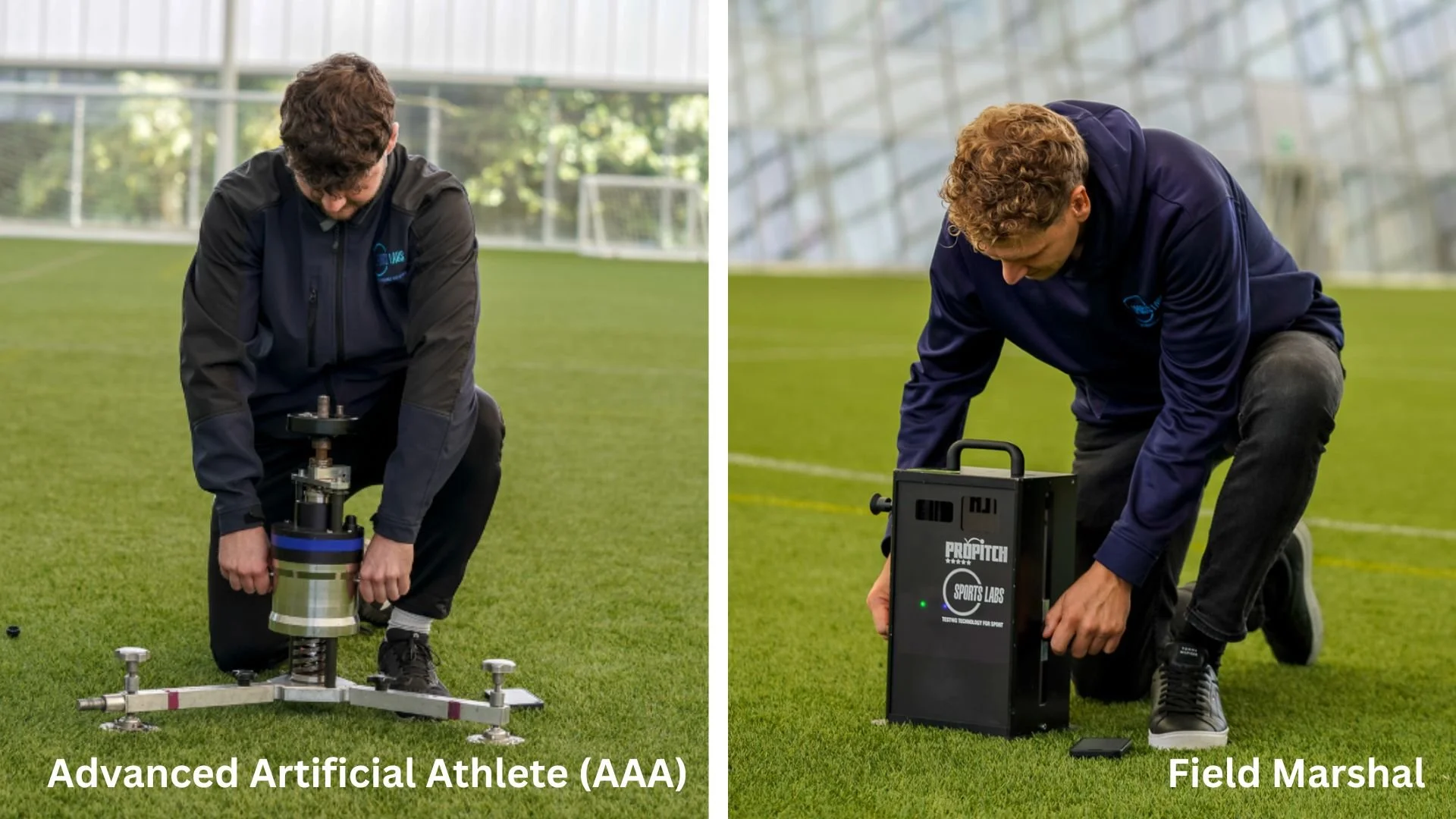
At the time, industry-standard Advanced Artificial Athlete (AAA) systems provided valuable measurements such as Shock Absorption (%), Vertical Deformation (mm) and Energy Restitution (%). However, these systems are heavy, cumbersome and less practical for quick data collection. Simpler devices such as the Clegg Hammer and GMax offered ease of use, but each provided only part of the overall picture in what is effectively a Hardness value. Our ambition was to combine the best aspects of all three systems into a single device.
From Concept to Prototype
During early 2020, the first prototype was designed and developed entirely in-house by our Innovation & Development Team, with manufacturing support provided by our local machinist in Scotland.
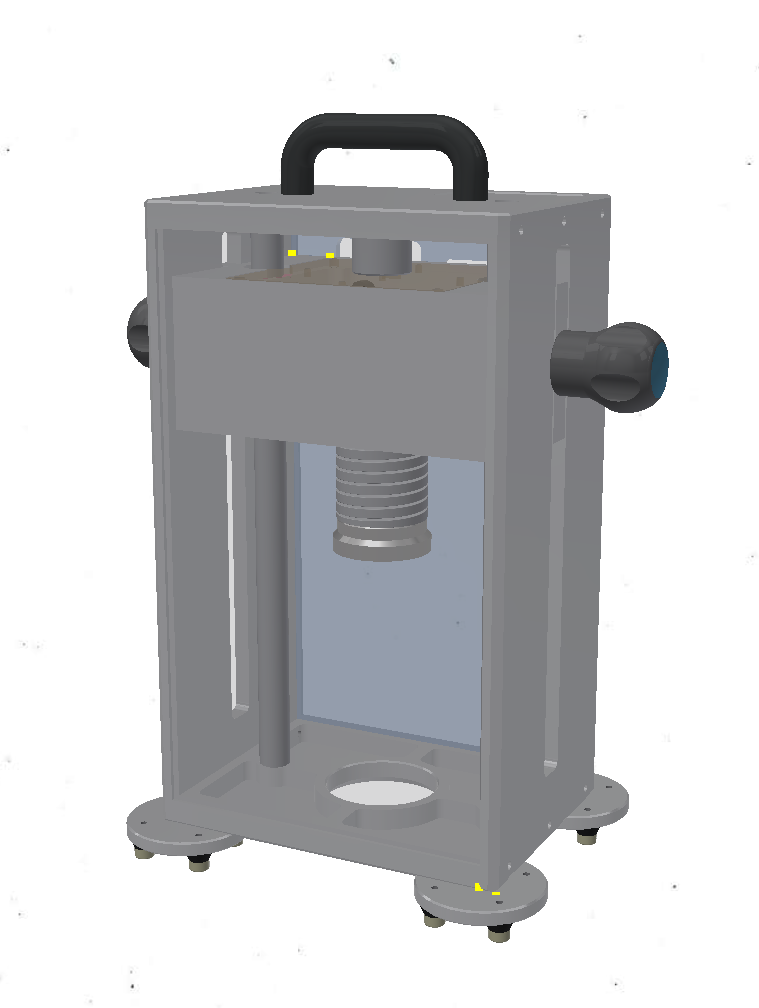
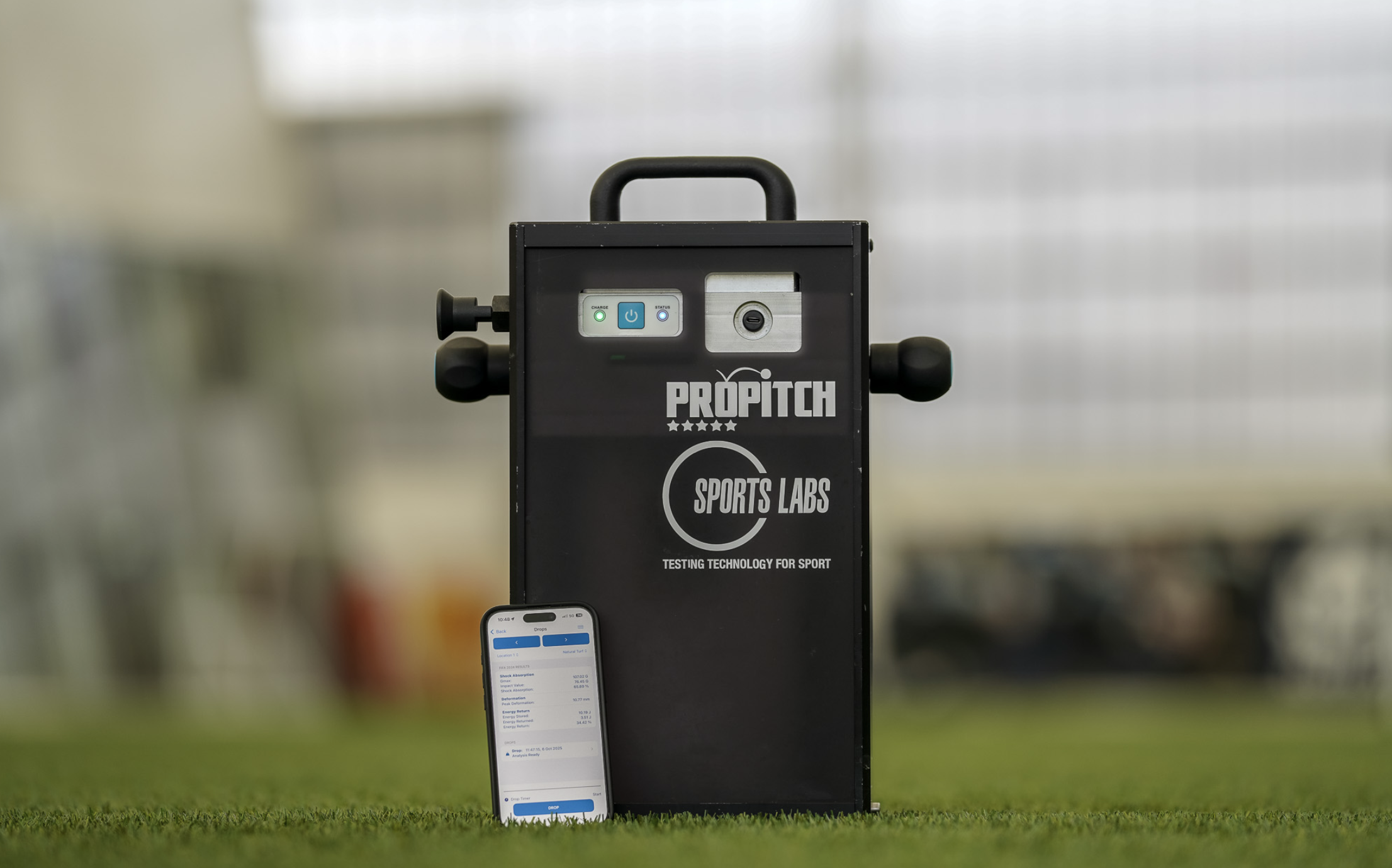
The result was a compact device weighing approximately 15kg and standing around 350mm high. Designed for single operator use, the unit could be carried easily between locations and operated through a companion app with the simple press of a "Drop" button.
Internally, the device incorporates a falling mass of just under 7.5kg, dropped from approximately 170 mm onto a rounded stainless-steel foot identical to that used on a standard AAA device. Between the mass and the impact foot, a similar spring set-up used within the AAA device is also used. This spring represents the compliance of the human musculoskeletal system during foot strike, simulating how the body itself deforms and absorbs energy during impact. By reproducing this biomechanical interaction between athlete and surface, the device is able to therefore assess how much energy the surface absorbs, how much it deforms and how much energy is returned to the user.
While the mechanical design progressed smoothly, integrating wireless electronics presented some unexpected challenges. Early versions housed the electronics within the metal mass itself, unintentionally restricting Bluetooth communication. Several design iterations were required before a reliable solution was achieved.
The Real Challenge: Data Validation
Designing and manufacturing the hardware proved to be the straightforward part. The real challenge was ensuring that the new device produced outputs comparable to established industry equipment.
Over several months, hundreds of surfaces were tested both in our laboratory and out in the field. Trials included visits to The Oriam and Tottenham Hotspur's Training Centre and Stadium, where the new impact device was tested alongside calibrated AAA, Clegg Hammer and GMax systems. A chance encounter with Jose Mourinho on Spurs First Team Pitch 2 provided the opportunity for our Innovation & Development Manager to pitch the new device to a coach fairly in-tune with sports analytics – we think he was impressed.
This process generated thousands of individual data points. Each dataset was carefully analysed using linear regression techniques, with the objective of correlating the outputs from the new device with those from the existing reference equipment. These correlation factors ultimately became embedded within the software calculations, allowing our new system to output familiar and understandable results.
A New Generation of Electronics
In 2024, development of our own Sports Labs Test Hub platform marked another major milestone. Alongside the app, we designed a universal PCB platform with a local electronics partner, bringing electronic development under our own control and reducing reliance on outsourced hardware solutions.
This transition coincided with substantial changes introduced by FIFA. The traditional measurements of Shock Absorption, Vertical Deformation and Energy Restitution were updated to the following measurements, accompanied by a small filter change:
Peak Shock Absorption (%)
Peak Deformation (mm)
Energy Return (J)
To maintain compatibility, Sports Labs Test Hub was developed to calculate and report both FIFA 2015 and FIFA 2024 outputs, significantly enhancing the products offering. Because the new FIFA calculations differed from previous methods, the validation programme began again, with hundreds of additional samples collected across artificial turf systems, natural turf surfaces, shockpads and polymeric tracks, providing a broad dataset for further correlation and analysis.
Recognition by FIFA
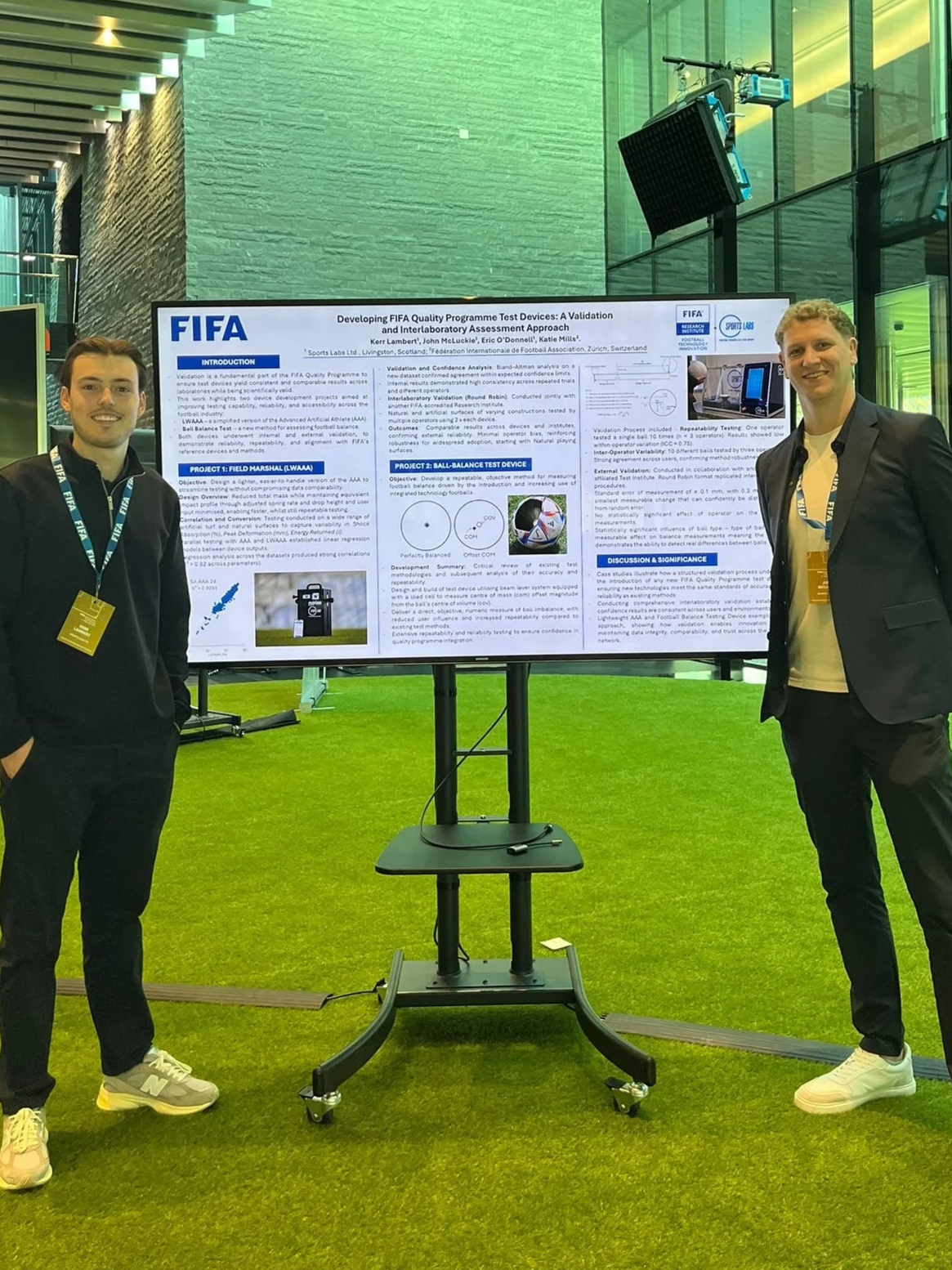
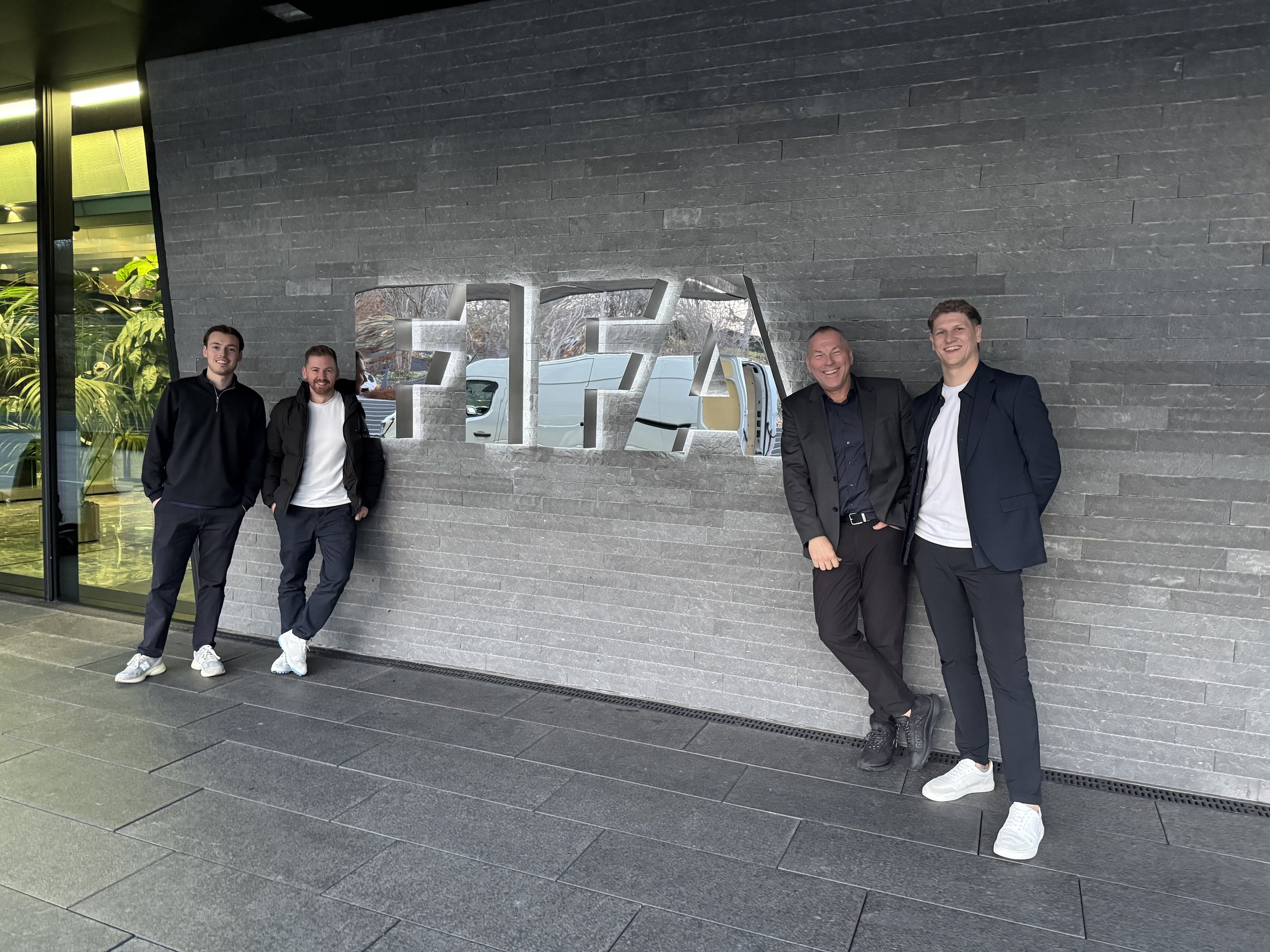
One of the proudest achievements in the journey of the Field Marshal has been its acceptance into the FIFA Quality Programme for Natural Playing Surfaces. Over several years, the device and data had been presented at several Technical Advisory Group (TAG) meetings, demonstrated during official FIFA & World Rugby Round Robin events, until it was subjected to independent validation alongside multiple compliant AAA devices in collaboration with another FIFA Preferred Research Institute.
Following this process, the Field Marshal was officially voted on and accepted into the FIFA Quality Programme for Natural Playing Surfaces in January 2026, with publication expected shortly.
Driving Simpler Surface Testing
The Field Marshal represents a significant achievement for our Innovation & Development Team and reflects our commitment to advancing sports surface testing through practical innovation.
By delivering technical information through a device that is lighter, simpler and easier to operate than traditional systems, the Field Marshal helps make surface performance data more accessible to everyone, from grounds staff and test technicians to facility owners and operators.